Saturday, 30 May 2015

Sow Grow Repeat: Compost on the Guardian gardening podcast

Cold composting
Cardboard tubes and corrugated cardboard adding carbon, and air, to the heap

Oxfordshire Master Composter Emma Cooper has been chatting about compose with Alys Fowler and Jane Perrone on the latest episode of the Guardian gardening podcast.

From the Sow, Grow, Repeat website, you can listen to the show online, download an mp3 or subscribe via iTunes.

Find out what unusual items Alys likes to add to her heap, Emma's top tip for healthy compost, and all about the microbes helping it to rot down.

Saturday, 9 May 2015

Extra-large garden waste collection

Brown bin
This looks like a job for Brown Bin!

Getting stuck in to the gardening this month? If you're producing more garden waste than you can compost, then take advantage of the local council's offer this month, and have it collected with your brown bin.

If you're in South Oxfordshire, then you can put out one extra bin's worth of garden waste on your normal collection day between 11 and 15 May 2015. In the Vale of the White Horse, the extra large collection is during the week 18 and 22 May.

In either case, extra waste should be put out in a cardboard box or a clear bag - Biffa can't collect waste in industrial sacks, and they need to be able to tell that the contents is garden waste.

If you're not already a brown bin customer, there will be a special promotional period in June and July when you can save 10% on the price of this annual service. And existing customers can sign up for an extra bin during the promotion period and receive a 10% discount on their new bin for a year.

Monday, 27 April 2015

COMPOST AWARENESS WEEK – 4th to 9th May 2015

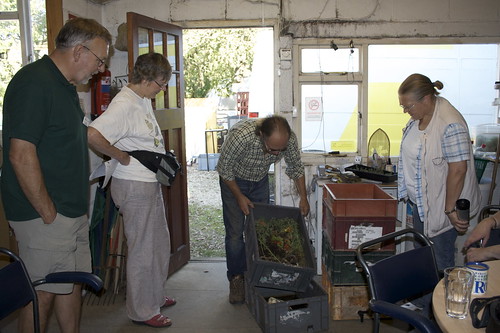
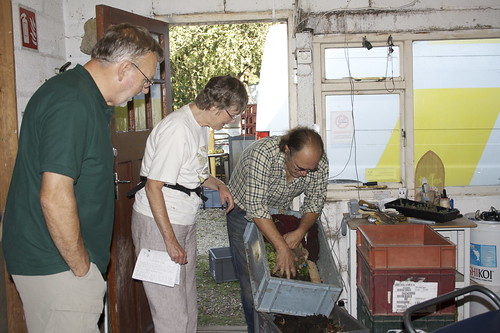
Worm compostera> Dedicated Oxfordshire Master Composters examining a homemade worm compost bin

As part of International Compost Awareness Week, Oxfordshire County Council is encouraging more residents to get composting with a fantastic offer promoted in partnership with getcomposting.com. Residents can purchase discounted compost converters from as little as £17.98 (down from £19.98 last year) and a second compost converter from only £8.99 (RRP £39), a massive saving! (A one-off delivery charge of £5.99 applies.)

More than 30% of the average household waste can be composted, and home composting is a great way to reduce the amount of organic kitchen waste that goes into your household bin. It’s also a cheaper alternative to chargeable garden waste collections and has the added benefit of producing a FREE supply of top quality compost that will not only improve the quality of home grown fruit and vegetables but also increase their yield.

And to get you in the composting mood, we have some top composting tips from Oxfordshire Master Composters:

  • I "cook" my compost, to sterilise it and kill off any hardy weed seeds. I stick it in the oven for 10 minutes, or nuke it in the microwave - MC Ailsa Barber.
  • My favourite tip is saving up coffee grounds from my cafetiere mixed with water in an old plastic bottle and, when full, poured into the composter – MC Angela Hoy.
  • Most people know that leaf mould can take a long time to rot down as do shredded prunings. The process can be speeded up by mixing them both with lawn cuttings which, during the summer can be too much to add to a compost bin. I keep leaves and shreddings in a brick enclosure and then add the grass to the top of the heap and fork it in - you end up with a large heap of a black crumbly mix heaving with worms which is the basis of my tomato trench – MC Colin Fox.
  • Remember that compost is much better on the garden than stored in a compost bin, so start using it and make space for the new season’s contributions – MC Lynda Smith.

Saturday, 25 April 2015

How worms can reduce our waste

Nearly a third of the world's food ends up in the bin. There is hope, however, in the form of worms, which naturally convert organic waste into fertilizer. In this TedEd video, American Matthew Ross details the steps we can all take to vermicompost at home - and why it makes good business sense to do so.


To find out more about food waste in the UK, and how you can reduce the amount of food you throw away, check out Love Food Hate Waste. And to learn more about worm composting, read Eco Garden: Worm Composting, by Master Composter Emma Cooper.

Monday, 29 December 2014

Love Food Hate Waste game

Oxford Brookes students have produced an interesting video on the art of reducing food waste!

Friday, 11 July 2014

What do you grow in yours?

An abridged version of this article has just appeared in the Oxfordshire Master Composter's newsletter, but you can read the full length version here!

As Master Composters we get the occasional question about what to do with finished compost. Even people without a garden can put it to good use, refreshing the compost in which their houseplants live. Otherwise there’s the option of a little guerrilla gardening, or finding a friend who can use it. ‘Disposing’ of compost is not a problem for keen gardeners - it has so many uses that it's simply not possible to make enough of the stuff. You can use it to feed plants or to improve the soil, as a surface mulch to do both and keep the weeds down at the same time, or as the nutritious bit of a potting mix for container plants.

And so when it comes to compost, we have to do some triage and use our compost where it will do the most good. This year that may well mean improving that waterlogged patch of soil that just won't dry out. Some years it means using it to lighten up the clay soil so that it doesn't crack like a dried up river bed when there's a hosepipe ban. Feeding hungry plants like fruit bushes, squashes and sweetcorn is often a priority.

So what do you grow in yours? The compost from my garden has a slightly more exotic life than most, I suspect. When other gardener's thoughts are turning towards tomatoes, I'm sowing physalis, the golden berries in papery husks that look very posh in the fruit bowl and make tasty pies and jams. One year soon it will be the very spiny litchi tomato (or Morelle de balbis). Harvesting them will be a labour of love, but the plants are hardier than normal tomatoes and might survive the winter outside.

I love spuds, but they're not the only tubers growing in my compost. Andean oca is a regular, throwing up clover-like foliage in discrete clumps, then following on with a harvest of brightly-coloured and slightly lemony tubers after the first frosts hit in the autumn. Yields are not yet impressive - the plant is still adjusting to life in the UK. But that's OK, the potato took a while to get settled in as well.

If it’s something slightly more reliable you’re after then have a look at Chinese artichokes. Related to mint, and with the same rather spreading habit, they’re an easy plant to grow. Like Jerusalem artichokes and horseradish, they’re one to consider growing in a container if you think you might ever want to eradicate them from your plot. Chinese artichokes produce small and strongly ridged tubers that are a beautiful pearlescent white. Some people think they look like fat white grubs you may encounter during a bush tucker trial, but Chinese poets apparently liken them to pale jade pearls, and I like to think of them that way.

My passion for growing unusual plants has been a fascinating journey, and I have met lots of interesting characters along the way. I have interviewed many of them for my latest book, which I am self-publishing as an ebook. Jade Pearls and Alien Eyeballs is a guidebook of sorts, telling the story of unusual edible plants and the people who choose to grow them. Although we tend to think of our desire for novelty as a modern obsession, in fact people have been moving plants across the world since ancient times, and so I also take a look at the journeys some of our favourites have made from their homeland to our gardens and kitchens.

Where do the alien eyeballs come in? You’ll have to read the book to find out! It’s available to preview at Smashwords, and you can order a copy there in a wide choice of formats (including PDF for those of you without an e-reader). RRP is US$2.99, but Master Composters can save 10% by using the coupon code HB84T.

Sunday, 25 May 2014

Britain forgets the art of composting

Oxfordshire Master Composters investigate worm composting

A recent survey by BusinessWaste suggests that 97% of UK households* don’t compost and that many Britons have never knowingly composted food or garden waste. Even more worrying is their finding that most British households throw compostable waste straight into the bin, even if council collection facilities exist, meaning that thousands of tons of unused food goes directly to landfill or incineration every year.

"We already know that 15 million tons of perfectly good food is wasted every year," BusinessWaste.co.uk spokesperson Mark Hall says, "And a fair proportion of this could easily be composted, either at home or by councils."

According to the survey, many people cite lack of time, lack of gardening skill, or lack of motivation for doing so, but this does mean there's plenty of scope for Master Composters to show people that composting is easy and needn't be time-consuming at all!

There are huge environmental benefits to be gained from home composting, which turns waste products into useable 'fuel' for your garden! BusinessWaste have put together a basic Home Composting FAQ, but if you want some help to get started (or to keep composting) then contact your local council to get in touch with a local Master Composter. If you live in Oxfordshire then contact the Oxfordshire Master Composters - we're happy to help!


*These results are based a survey of 3015 households.